
Retaining Wall Materials Explained: BASE, Backfill & Drainage Aggregates
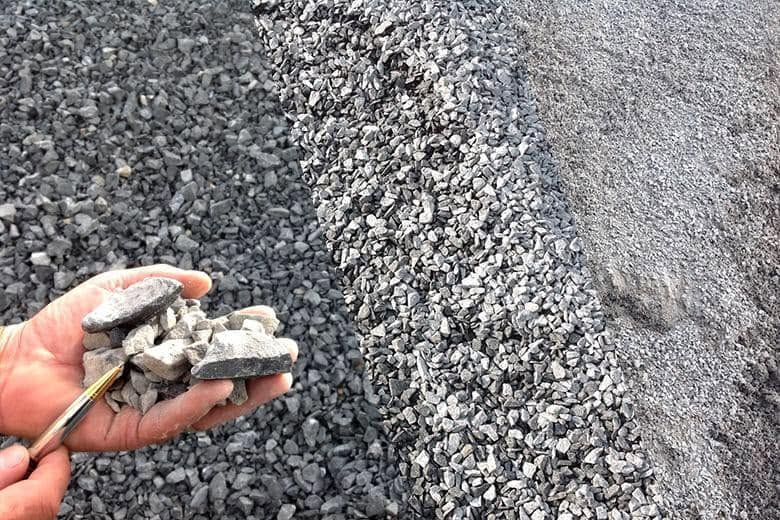
A retaining wall rarely fails because the blocks were wrong. It fails because of what's happening behind them — a footing that wasn't properly compacted, or drainage that wasn't sorted before the soil went back in. If you're planning a retaining wall in Port Macquarie, understanding the three materials doing the real structural work will save you a far more expensive fix down the track.
Why The Blocks Are The Easy Part
Most people planning a retaining wall focus almost entirely on the visible product — the blocks, sleepers or panels forming the wall face. But the materials you never see once the job's finished — the footing base, the backfill, and the drainage layer — are what actually determine whether that wall is still standing straight in ten years, or bowing, cracking and tipping.
Get this wrong and a wall doesn't fail overnight. It fails slowly: water builds up behind it, saturated soil gets significantly heavier than dry soil, and that added hydrostatic pressure loads the structure in a way it was never designed to carry. The fix is genuinely simple and cheap compared to a rebuild — it just has to happen at construction, not after.
The Footing: Compacted Crusher Dust Or Road BASE
Every retaining wall starts below ground, with a compacted footing that gives the first course of blocks a solid, level surface to sit on. This layer typically runs somewhere around 100–150mm deep and needs to compact down firm and even, since any softness or unevenness here carries straight through into the finished wall.
Crusher dust (also known as blue metal dust) is a natural fit for this job — it's a fine, compactable material that spreads easily and compacts down hard, creating a stable, level base. Road base (DGB20) is another common choice for the footing, particularly on larger walls or where extra load-bearing stability is needed, since it's specifically engineered to comply with surfaced-road specifications and holds up firmly under sustained pressure.
A level, well-compacted crusher dust footing gives the first course of blocks a solid, even base to sit on, which matters more than most first-time builders expect — an uneven footing shows up as a wavy, poorly aligned wall face by the time you've stacked a few courses.
Important distinction: while crusher dust is excellent for the footing, it's not suitable as drainage backfill behind the wall. Once compacted, crusher dust becomes dense and holds water rather than letting it through — exactly the opposite of what you want happening behind the wall face, which brings us to the next material entirely.
The Backfill: Free-Draining Blue Metal Aggregate
Directly behind the wall face, you need a genuinely different material to the footing: a clean, free-draining aggregate that lets water pass through rather than holding it. This is where 10mm or 20mm blue metal aggregate does its job — angular, consistently sized, crushed stone with enough open space between the particles to let water move freely down to a drainage outlet rather than building up against the wall.
Behind the wall, a free-draining aggregate over a compacted road base prevents water pressure building up against the structure, which is the single biggest cause of retaining wall failure over time. This drainage zone typically runs a few hundred millimetres out from the wall face, wrapped in geotextile fabric to stop fine soil particles migrating into the aggregate and silting it up — a slow process that can take years, which is exactly why drainage failures often show up long after a wall was built and everyone's forgotten what went in behind it.
Why Drainage Matters More In Port Macquarie Than Most Places
This is where local conditions genuinely change the calculation. Port Macquarie and the Mid North Coast see heavy, sustained rainfall through the year, and retaining walls here are frequently built on coastal sandy soils that behave very differently once saturated compared to drier inland ground.
A retaining wall without proper drainage in this climate isn't a slow-burn risk — it's a near-certainty of problems, given how much water regularly needs to move through the ground behind a wall here. Correctly specified drainage aggregate, paired with a properly compacted footing, is genuinely non-negotiable in a region with Port Macquarie's rainfall pattern, not just a nice-to-have upgrade.
Estimating Quantities And Arranging Delivery
Working out how much material you need comes down to the wall's length, height, and the depth of both your footing and drainage zone:
- Footing: Calculate the wall's length × width of the footing trench × depth (typically 100–150mm), then convert to cubic metres for your crusher dust or road base order.
- Drainage backfill: Calculate the wall's length × the drainage zone depth (commonly 300–500mm behind the wall face) × the wall's height, again converting to cubic metres for your blue metal aggregate order.
It's always worth ordering a small buffer above your calculated figure, since compaction and minor site variation can mean you need slightly more than the theoretical volume suggests.
Sourcing The Right Materials For Your Project
Sourcing the right landscape supplies in Port Macquarie — from footing base to drainage backfill — keeps a retaining wall stable for the long term. Ian Brown Sand Supplies and Tipper Hire has supplied crusher dust, road base and 10mm and 20mm blue metal aggregate to builders, landscapers and homeowners across Port Macquarie, Wauchope, Laurieton, Kempsey and Taree since 1985.
Behind the wall, a free-draining aggregate over a compacted road base prevents water pressure building up against the structure, and it's exactly this combination — footing material and drainage aggregate together — that we can supply and deliver directly to your site via tipper, whether you're building a small garden retaining wall or a larger commercial or civil project.
A well-built retaining wall is a long-term asset — see how quality landscape supplies transform your property's value when the base materials are specified correctly.
Get Your Materials Sorted Before You Start
Whether you're a homeowner tackling a first retaining wall or a landscaper quoting a larger job, getting the footing, backfill and drainage right from the outset is what separates a wall that lasts decades from one that needs rebuilding within a few years. Behind the wall, a free-draining aggregate over a compacted road base prevents water pressure building up against the structure — get in touch to work out quantities and arrange your landscape supplies in Port Macquarie.
Explore our full range of drainage aggregate and road base, and check our crusher dust for the footing options to get your project properly specified from the ground up.